

Science Was Always Philosophy
The new world will force you to remember.

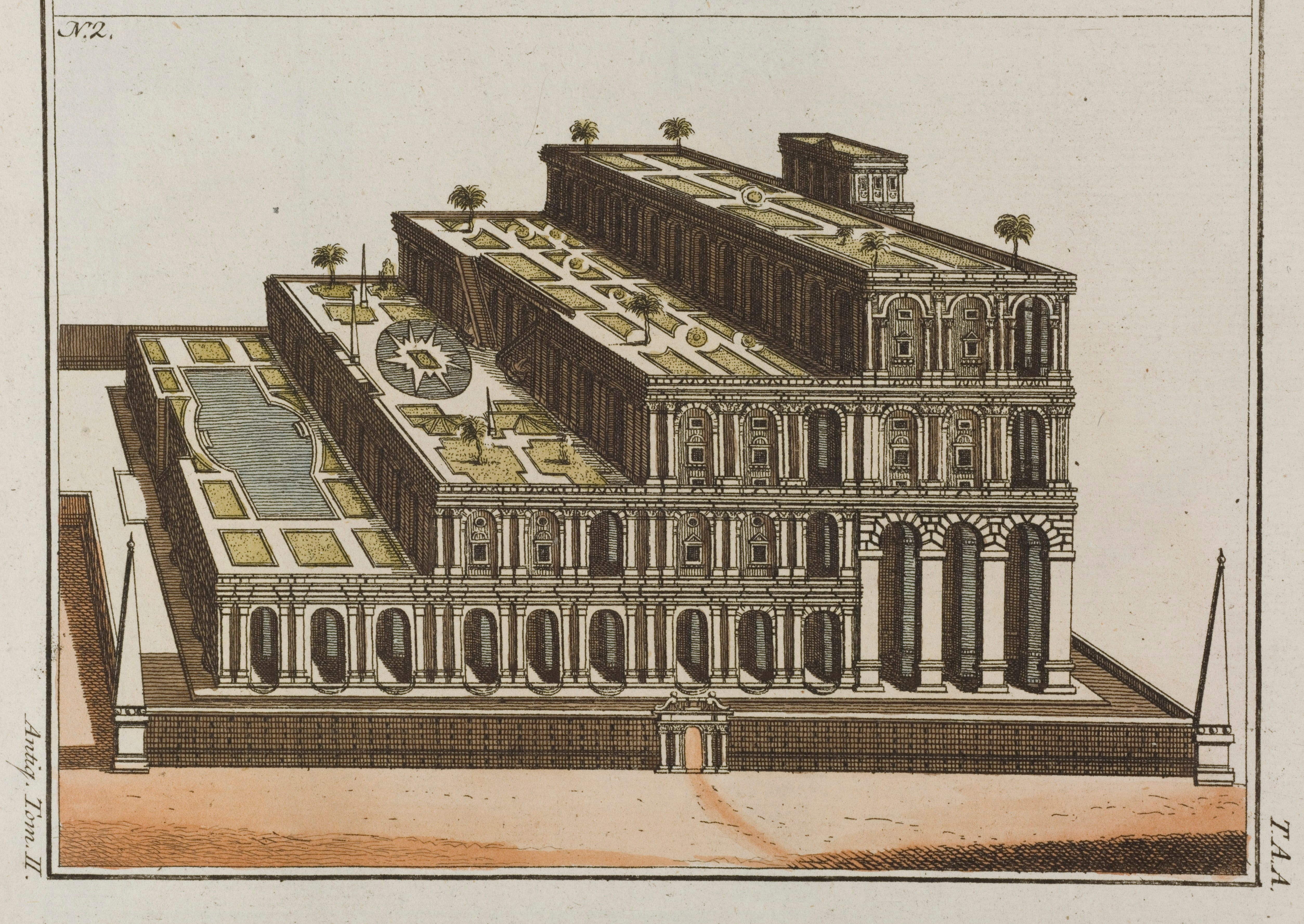
“The word science, just like the words Germany, pork, and republican, is the result of a discursive, historical process fraught with miscommunication and political appropriation.”
— Barrett Honors Thesis, A Political Critique of the Objectification of Science and Religion, Spring 2018
The most successful philosopher-builder project in history was not a startup, a research lab, or a frontier model. It was modern science.
Science as a category was invented at a time and place. It does not have some essential transhistorical essence that has existed in all human civilizations. The people who built it would not have recognized the name we now give them. Francis Bacon, Robert Boyle, Isaac Newton, the early fellows of the Royal Society: they were not "scientists." The word did not exist, and would not be coined until the 1830s. They were natural philosophers, and they practiced theology, metaphysics, and empirical observation as a single integrated act.
Newton wrote more on biblical chronology and alchemy than on physics, millions of words, most of them unpublished in his lifetime. When John Maynard Keynes bought the papers at auction in 1936 and actually read them, he concluded that Newton “was not the first of the age of reason. He was the last of the magicians.” Boyle gave us Boyle’s Law and helped found the Royal Society, then wrote a will endowing a lecture series for proving the Christian religion true against, in his own phrasing, notorious infidels.
This was not a hobby running alongside the day job. It was the same job. Science was always a subset, a branch, of philosophy—and often of theology. We have simply spent a century and a half forgetting that it ever was.
That forgetting is the subject of this essay, because it is about to get expensive.
For a long time the separation of science from philosophy looked not merely workable but obviously correct, the natural maturation of a discipline shedding its medieval baggage. I want to argue it was something narrower and more interesting: a bet. A good bet, one that paid out for over a century. But a bet whose bookie just died, and the horses are running in the opposite direction. And the horses are on fire. The horses are AI. It’s a solid metaphor.
The bet modernity made
The separation came late and fast, mostly across the nineteenth century and accelerating through the logical positivism of the twentieth. Its wager was elegant: method can substitute for judgment. Follow the right procedures, control the right variables, submit to peer scrutiny, and you no longer need wisdom, only rigor. The Royal Society took as its motto Nullius in verba, take nobody's word for it, an epistemological declaration of independence from authority and tradition alike. By the time the Vienna Circle set out to scrub metaphysics from meaningful speech, the fact/value distinction, the rule that what is and what ought can never share a sentence, had hardened into architecture: the sciences in one building, the humanities in another, theology shown quietly to the door. The question natural philosophy had always carried at its center, what is knowledge for, was never refuted, only struck from the syllabus.
This is an old claim, and mostly the people who lost the argument have made it. I have been one of them for a while—my undergraduate thesis was on how the categories “science” and “religion” got drawn in the first place. What is new is that it is about to become empirical. The bet worked, but method was never self-sufficient; it worked because the culture was still living on capital it had not earned and had stopped counting.
The inherited moral and metaphysical wealth of Christendom and the borrowed confidence of Enlightenment humanism kept supplying a shared sense of why any of this mattered, what truth was, why one ought to pursue it honestly even when lying paid better. Elizabeth Anscombe named the mechanism in 1958: we had kept the word ought long after abandoning the law conception of ethics that gave it force, so it survived as a word with nothing behind it. The same was quietly happening to truth. Method spent that inheritance with tremendous efficiency and filed the returns under its own name.
Here is where you expect me to say the fruit went bad. It didn’t. That is the actual problem. The separation delivered antibiotics, semiconductors, the vaccine schedule, the screen you are reading this on. The yield was extraordinary and it is still coming in, which is precisely why nobody audited the soil. Spending capital looks identical to earning it right up until the balance is called, and a garden living off inherited ground looks exactly like a garden that made its own. Nobody noticed the gardener had left, because the garden kept producing. MacIntyre put the same point about the moral inheritance and it holds for the epistemic one: “This time however the barbarians are not waiting beyond the frontiers; they have already been governing us for quite some time. And it is our lack of consciousness of this that constitutes part of our predicament.”
Knowledge is a garden, not a pipeline
It helps to stop picturing knowledge as a pump, information flowing from a source to a recipient, and start picturing it as a living system, the classical tree of life. As I put it in a paper years ago, “Philosophy is the trunk of knowledge. Metaphysics goes up and physics goes down. Epistemology goes out.”
A healthy knowledge ecology has three parts:
Soil: the epistemic culture that sustains inquiry, the shared assumptions about what counts as truth, as evidence, as a question worth asking at all.
Pruning: the disciplines and norms that decide what is allowed to grow, peer review and falsification, yes, but also taste, judgment, and inherited tradition about what good work even looks like.
and the Gardener: someone with the practical wisdom, the phronesis, to know what to cultivate and what to cut back.
Modernity's deeper bet was that all three could be mechanized at once. Method as the soil, method as the pruning shears, method as the gardener. Jacques Ellul had a name for what that produces: technique, method grown autonomous, no longer a set of tools but the thing that decides what counts as a reason. For a long stretch that looked plausible, but only because the garden was still living on soil it had not made.
I spent almost five years inside one of these gardens. As director of venture development at a state innovation agency, I helped score more than three thousand applications and keep watch over a portfolio in the billions, and the rigor was never what ran short. The metrics were spotless, usually. What no one in the building could answer, not the founders, not the volunteer judges, not the sharpest people I have ever worked beside, was the older question underneath the spreadsheets: worth building toward what?
The eternal glory of the Arizona Economy?
Big number go higher?
We had every instrument for timing the race and no account of why we were running it. By the end the innovation team was led by people who were frightened of innovation, the competent ones had mostly gone, and I had risen less by merit than by attrition, the last one in the room who still knew how the machinery worked.

The double edge of good thing cheap
Artificial intelligence is what finally makes the pretense impossible to keep up, and it cuts both ways simultaneously. When a machine can produce a passable essay or a serviceable policy memo on demand, the scarce resource stops being information and becomes discernment. Answers are cheap now. Knowing which answer is worth having, which question is worth asking, which fluent paragraph is quietly wrong, becomes the whole of the work. Answers pour out of every video, every infinite digital portal. That is a hard shove back toward the gardener's craft: judgment, taste, the capacity to tell signal from a very confident noise. In a world of infinite answers, the person who knows what to ask is indispensable. That person is, by definition, a philosopher.
AI also cuts at another darkening edge: If everyone holds access to infinite plausible-sounding knowledge and fewer and fewer share a basis for evaluating it, the result is a collapse of mutual intelligibility.
You can already see it in miniature: two experts, each with a fluent machine-built case, and no shared standard left to decide between them, so the argument does not resolve, it forks. The story in Genesis 11 is not mainly about language. It is about a civilization with unified technical capacity and no shared purpose beyond its own ambition.
"Let us make a name for ourselves,"
and the result was not ignorance but fragmentation. The people could still speak. They could no longer build together, because they had lost the ability to understand one another.
The scattering revealed something already true: technical unity without shared wisdom is unstable. The danger is not that no one will know anything. It is that everyone will know something different, with no common ground left to stand on. The information garden is breaking into a thousand private enclosures with no paths between them. Pope Leo XIV's first encyclical, Magnifica Humanitas, opens on exactly this fork: a new Tower of Babel, or the city where God and humanity dwell together.
What some traditions never let go
The fact/value split was never universal, even at the height of its fashion. Certain traditions kept practicing unified inquiry while the rest of the culture treated it as an embarrassment. Christian natural philosophy, running from Aquinas through the Reformers and on to twentieth-century figures like Michael Polanyi and Alasdair MacIntyre, never stopped insisting that knowledge is purposive, that knowing the what while ignoring the what-for leaves the knowledge incomplete. This is not a triumphal claim; these traditions carry their own failures and blind spots. But they preserved the one thing the broader culture discarded: the conviction that the philosopher gardener matters.
Polanyi, a working physical chemist before he was a philosopher, argued in Personal Knowledge that all knowing involves tacit commitment, that even in the exact sciences objectivity does not mean the absence of the knower. It reads now like a twentieth-century rediscovery of what natural philosophy had assumed all along.
MacIntyre's After Virtue made the parallel diagnosis on the moral side: modernity kept the vocabulary of virtue after losing the tradition that made the vocabulary intelligible, so we go on wielding words like good and ought as orphaned fragments with no frame to anchor them. The same thing is now happening to our epistemic vocabulary. We still say truth, evidence, knowledge, expertise, and we mean less and less in common by any of them. We’re already a post-truth society if you weren’t aware. We’re about to be post-evidence.
Recovery, not nostalgia
None of this argues for a return to the thirteenth century, and I also want to keep it from curdling into the relentless nostalgia every human infinitely produces for a historical culture that never existed, whether the crusades or the white 50s or Rome or the synth 80s, whichever decade you thought you were promised.
Recovery is the better word, and it means three concrete things. It means naming what was lost, the integration of what is true with what it is for, plainly enough that the loss registers as a loss. It means recognizing that AI has made that integration urgent rather than optional, because the machine will hand you infinite answers and never once tell you which are worth having. And it means building the actual institutions, curricula, and communities that treat wisdom as a craft to be practiced rather than a concept to be cited, the way a guild treats a skill it intends to pass on.
The Cosmos Institute and others have lately started talking about "philosopher-builders," the idea of putting philosophers back in the room where technology gets built, and the phrase is exactly right, though it names something far older than the people using it may realize. The first philosopher-builders were the natural philosophers. Theory, and application. Understand the truth, so you can actually live a life worth living. The original goal of knowledge.
This is a map, not a proof. I have made claims here, that the fact/value split was a wager, that it ran on inherited capital, that AI is now calling the loan, and each of them deserves its own essay and its own evidence. In the ones to come I mean to give them exactly that. Why the "laws" of nature may be instruments rather than laws, and what follows if gravity is real, semantically, while the Law of Gravity is unreal. Why falsification does far less work than its reputation suggests. And which traditions kept the gardener on payroll when the rest of the culture let him go, and what that cost them. For now I only want to name the thing plainly enough that you can feel its absence as an absence.
This is close to why I keep writing Endwise at all, alongside the consulting: an attempt to garden in public, to hold what is true and what it is for in the same hand, in a culture that has kept them in separate rooms for a hundred and fifty years. The soil is not dead and the seeds are still in it; what is missing is someone willing to pick up the shears and decide what to grow. AI has made the garden effectively infinite, and infinity only sharpens the question the machine will never answer for us: what’s the growth for?